
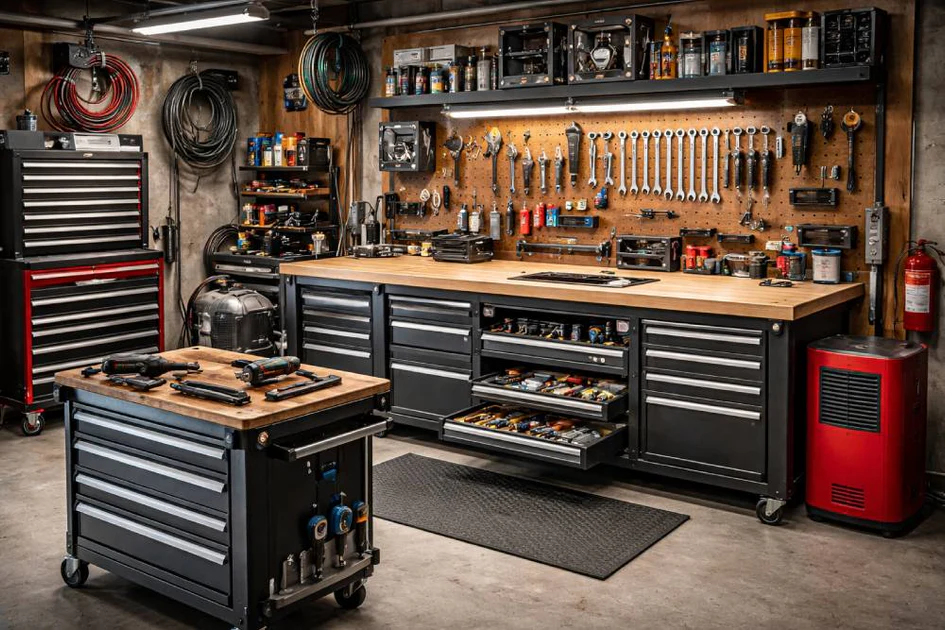
A workshop breathes on its own-gears turning, hands shifting pieces, ideas taking form. Hammers lie tangled with wrenches at first glance, cables snake over tabletops, and screws dot every corner like crumbs. Yet pause for a moment, and patterns emerge beneath the apparent chaos. How someone steps forward, grabs what they need without thinking, and moves again tells a story. Where do pauses happen? What slows them down? These small moments add up, unseen but real.
Tiny shifts often lead to surprisingly smooth results. Few notice how much easier tasks become when everything moves within reach. A rolling toolbox isn’t just storage-it reshapes motion, choices, and even habits across the shop floor.
Simplifying How People Move Around the Workshop
Speed alone does not define good work; thinking ahead does. Constantly reaching for distant tools wears down focus bit by bit. When equipment rolls beside you, movements shorten naturally, and attention stays where it matters.
Picture gliding between work areas without constant stops. Tools sit at the right height, in a smart layout, on wheels that follow your rhythm. Small tweaks like this accumulate, layer by layer. What emerges isn’t rigid or forced-it’s effortless motion shaped by habit.
Less Effort, Less Fatigue
Muscle strain often creeps in unnoticed. Repeated lifts, twists, or stretches bring tiredness and errors over time. A tool chest trolley moves alongside you, keeping gear within easy reach. Awkward movements fade, and repetitive strain diminishes.
Comfortable setups help thinking stay sharp. When actions align naturally with tool placement, movement feels intuitive instead of forced. Small changes in posture or reach add up quietly, leaving energy where it matters most-on the task, not struggling with the setup.
Organization That Works With You
Tidying alone isn’t enough. True organization grows from daily habits. A rolling toolbox does more than hold tools-it shapes how tasks unfold. Some drawers are labeled, others arranged by frequency of use. Frequently grabbed items stay on top; less common ones nest below.
Retrieving a tool becomes automatic. Searching takes less effort, leaving more room for creating and problem-solving. Over time, the toolbox fits seamlessly into your workflow, supporting your routine rather than interrupting it.
Adaptable for Every Task
Every project is different. Sometimes you’re assembling a simple repair; other times, complex builds take over. With a mobile tool cabinet nearby, changing tasks feels natural rather than disruptive. Move it closer to welding stations, farther from dust, or beside new materials as needed.
Wherever the job takes you, tools move with you. Handling challenges becomes easier, smoother, and more intuitive. Knowing that the right tools are always within reach keeps focus steady and reactions calm.
Creating a Space Where Productivity Can Grow
Few realize how much a tidy workspace influences mindset. Neat surroundings clear mental clutter. With tools stored on wheels, disorder fades quietly, replaced by an effortless sense of order.
Flow doesn’t just improve speed-it reduces errors, lightens mental load, and encourages consistent results. Routines shift subtly. A workspace that once felt chaotic begins to support work naturally, guiding hands and attention without conscious effort.
Taking the First Step
A single rolling toolbox can fit into your shop without a full overhaul. Observe how you move, notice awkward reaches, and slide the cart closer to the areas where it matters most. One smart placement can cut down wasted steps by midweek.
For real-world options, a collection like https://www.tools.unipac.com.au/collections/trolleys offers ideas for integrating mobile storage into daily routines, helping gear move where it’s needed most.
Conclusion
Small choices shape work as much as big ones. Where tools live, how hands reach for them, and the paths they take all influence the effort involved in a task. A rolling toolbox may seem ordinary, yet it quietly transforms the way work flows.
In spaces where tools scatter and time slips, reducing clutter lifts the load. Motion flows naturally when everything has a place. Picture wheels gliding smoothly under shelves and cabinets-no more dragging gear, tripping on cords, or interrupting momentum. These subtle shifts make work feel lighter, steadier, and more efficient. Over time, what once felt like chaos settles into a rhythm where tasks unfold effortlessly, and hands stay free to do what they do best.