
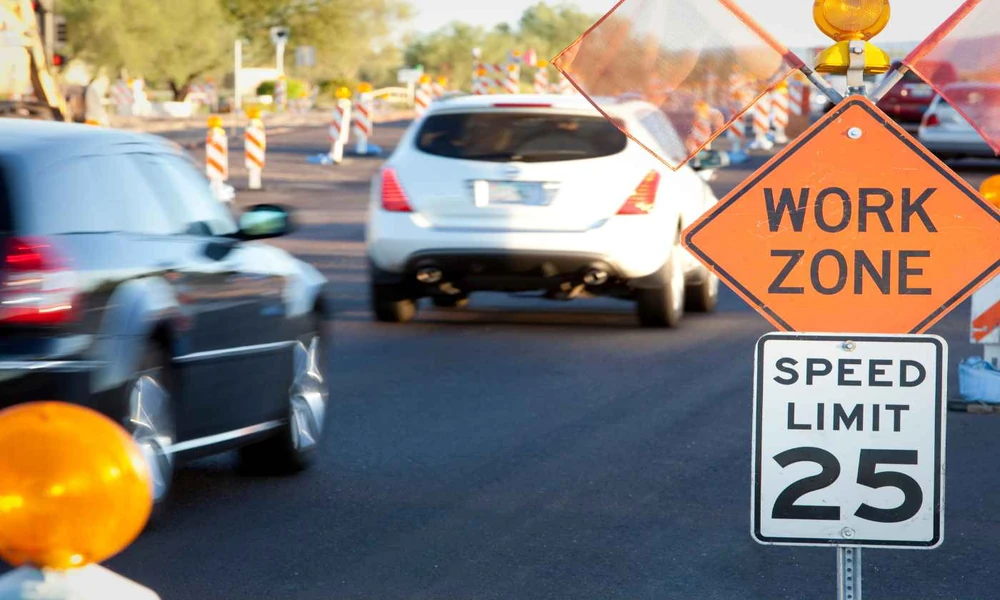
Highway construction sites sit in one of the most dangerous positions imaginable: a narrow strip of pavement between fast-moving traffic and a crew working just feet away. Cones and signs warn drivers that something has changed ahead, but warnings alone cannot stop a distracted or impaired motorist from drifting into a lane that was never meant to be crossed. That is where crash cushions come in, absorbing an impact before it ever reaches the people working behind it.
Work Zones Carry Serious Risk
Construction zones create a unique kind of hazard because they combine unpredictable driver behavior with workers who have nowhere to retreat. A traffic pattern shifts, a lane narrows, and drivers who are checking a phone or simply unfamiliar with the area may not react in time. Unlike an open highway shoulder, a work zone often leaves no buffer between the travel lane and the equipment, barriers, or personnel positioned just beyond it.
The stakes in that environment are considerably higher than they might appear from behind the wheel. A vehicle that veers off course at highway speed carries enormous force, and without something engineered to absorb that force, the results can be devastating for both the driver and anyone working nearby. Crews cannot control how attentive passing motorists will be, which is why the physical barriers protecting them have become just as important as the signage warning drivers to slow down.
Crash Cushions Absorb the Impact
A crash cushion is built around a simple principle: rather than stopping a vehicle abruptly, it absorbs and redirects the energy of an impact gradually. Fixed systems positioned at gore points, bridge piers, or guardrail ends are designed to compress and slow a vehicle in a controlled manner, reducing the violent deceleration that would otherwise occur on impact with an unyielding structure.
Some systems rely on reusable energy-absorbing materials that spring back into shape after a low-speed hit, while others use water-filled or sand-filled barriers positioned along the edge of a work zone to soften contact and keep a wandering vehicle from reaching the crew beyond it. Each type serves a slightly different purpose depending on the hazard being shielded, but the underlying goal remains the same: give an out-of-control vehicle somewhere safer to stop than the space where people are working.
Truck-Mounted Attenuators Add Mobility
Fixed crash cushions work well for stationary hazards, but highway construction rarely stays in one place for long. Truck-mounted attenuators solve that problem by putting the same energy-absorbing technology on wheels, positioned behind mobile crews as they move along a roadway performing striping, paving, or maintenance work.
These mobile units function as a rolling buffer, following the crew through a project rather than requiring a fixed structure at every stage of the work. If a vehicle strikes the attenuator truck from behind, the system is engineered to absorb that collision and prevent the impact from reaching the workers or equipment positioned ahead of it. That mobility makes truck-mounted attenuators especially valuable on projects where the danger zone shifts throughout the day, rather than staying fixed in a single location.
Choosing Certified Equipment Matters
Not all crash cushions perform equally, and equipment that has not been properly tested and certified can fail exactly when it matters most. Systems used on public roadways should meet recognized national crash-testing standards and carry approval from the relevant state and federal transportation authorities, ensuring they have been evaluated under real-world impact conditions before ever being placed near a live work zone.
This is why sourcing equipment from an established supplier carries such weight. Companies with deep experience in traffic safety, such as Stripes & Stops Company, Inc., understand which systems suit a specific hazard and can help a contractor select equipment that meets both project requirements and safety certification standards. That guidance matters as much as the equipment itself, since even a well-engineered crash cushion offers little protection if it is mismatched to the hazard it is meant to shield.
Work zones will always carry an element of risk that no amount of signage can fully eliminate. Crash cushions and truck-mounted attenuators do not remove that risk entirely, but they give both workers and drivers something highways rarely offer on their own: a second chance when things go wrong.