
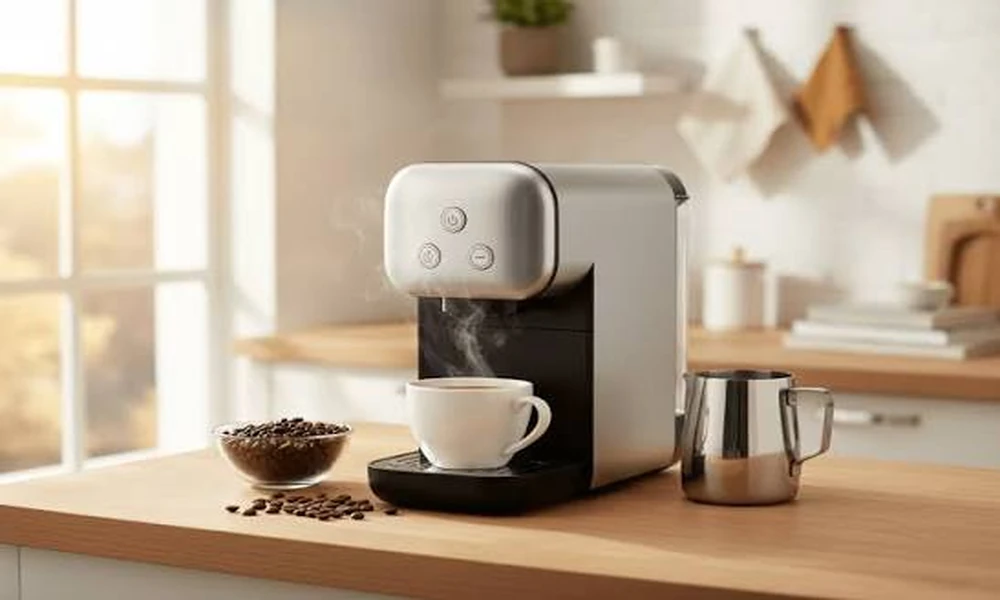
The machine is bought once and operated every working day for years, and almost all of the cost and nearly all of the irritation sits in the operating rather than the buying. Who fills it, who cleans it, what each cup actually costs, and what happens when the person who used to look after it leaves. Running coffee maker machine for business equipment well is an operational question that most organisations only address after the equipment has disappointed them.
Work Out the True Cost Per Cup
Reduce everything to one number. Take the monthly machine cost, whether rental or depreciation, add beans or capsules, milk, cups and lids if disposables are used, sugar and stirrers, water filtration cartridges, cleaning consumables, and the service agreement. Divide by the cups actually produced, which a machine with a cup counter will tell you. The result frequently surprises people, and it is the only figure that lets you compare a capsule system against bean-to-cup honestly.
Consumption Is Usually Higher Than Estimated
Offices consistently underestimate how much coffee gets made, particularly where drinks are free. A planning figure of one and a half to two drinks per person per day is a reasonable start, but the real number depends on how good the coffee is, since a machine producing drinks people actually want sees far more use than the one it replaced. Budget for that increase rather than being surprised by the second month’s consumables invoice.
Decide Who Owns the Daily Routine
The most common failure in business coffee is not mechanical. It is that nobody was assigned the daily tasks, emptying the grounds container and drip tray, running the prompted cleaning cycle, refilling beans, managing the milk fridge, and wiping down. In an office this needs naming a person and a backup, ideally with the tasks written on a card by the machine. Left to collective goodwill, these happen enthusiastically for two weeks and then stop, and the coffee deteriorates in a way people blame on the beans.
Placement Determines Whether It Gets Used Properly
Site the machine near a sink and a bin, because the alternative is grounds and milk residue accumulating on the counter. Allow height clearance to open the hopper and bean container in position, ventilation behind, and enough counter space that people can put a cup down. Keep it away from desks if the grinder is loud, and think about queueing space, since a machine in a corridor produces a bottleneck at nine every morning.
Disposables, Mugs and Waste
Disposable cups are convenient and become a meaningful cost and waste stream at any volume. Many offices provide mugs and keep a small stock of disposables for visitors, which reduces both. If disposables are used, size them to the drinks the machine produces rather than buying one large size for everything. Capsule systems generate their own waste stream that accumulates faster than people expect, and it is worth establishing what happens to it before choosing that format.
Milk Management
Fresh milk needs a fridge, stock rotation and someone noticing when it runs out, and it is the single most common cause of a machine standing idle. Establish who orders it, how much is held, and where it is stored, since a fridge shared with lunches will have the milk moved and forgotten. Suppliers offering business coffee equipment and supplies can often include milk in a scheduled delivery, which removes the ordering problem entirely.
Track Consumption and Review It
A cup counter tells you whether the machine is correctly sized, whether servicing is due on usage rather than a calendar, and whether consumable orders make sense. If the counter shows two hundred drinks a day on a machine specified for a hundred, that explains both the queue and the frequency of faults. Reviewing the figure quarterly turns coffee from an assumed cost into a managed one, and occasionally identifies that a second machine would cost less than the current one being run beyond its class.
Plan for Staff Turnover
Whoever was trained at installation will leave. Ask the supplier for a short written or filmed guide covering daily cleaning and basic troubleshooting, keep it where the machine is, and add the routine to the onboarding of whoever takes over the pantry. The gradual decline in coffee quality that offices report after a year is almost always the departure of the person who knew how to run the cleaning cycle rather than any change in the machine.
Escalation and When to Call
Establish who calls the supplier and what they should try first, since many faults resolve with a cleaning cycle or a filter change. Keep the model number, serial number and contract reference somewhere accessible rather than in one person’s email. Ask the supplier what common faults look like and which are user-resolvable. Run this way, a coffee maker machine for business use produces consistent drinks for its whole service life, and the difference between an office that gets that and one that does not is almost never the equipment.