
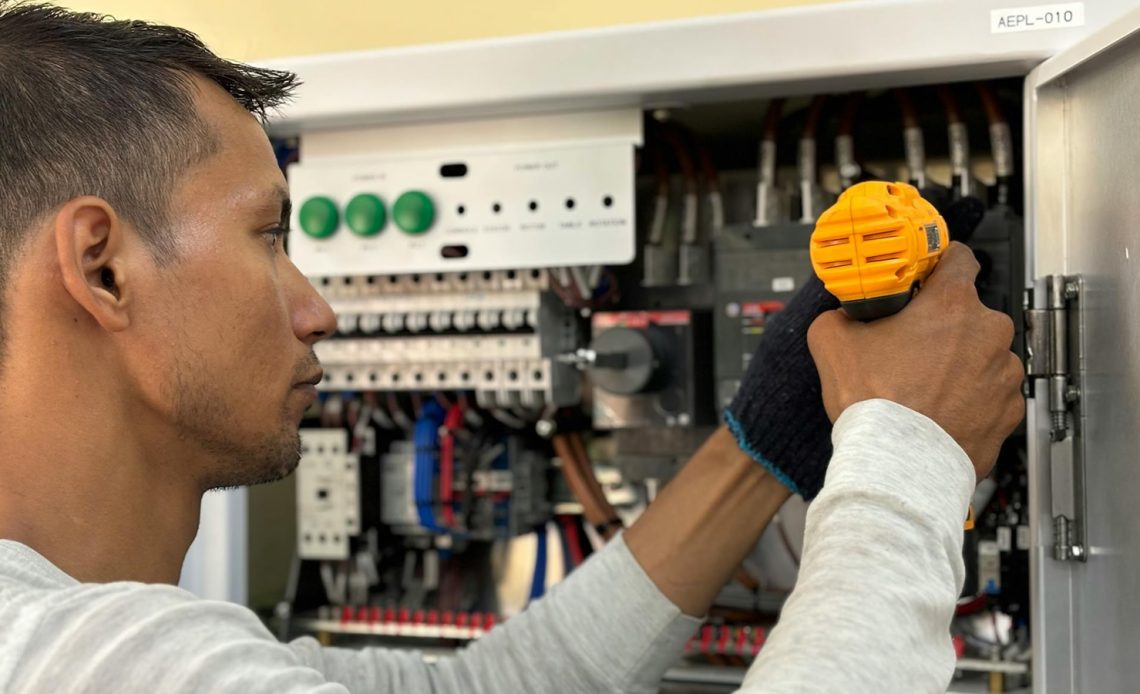
Modern industrial systems rely on electrical cabinets and control panels to safely distribute power, control machinery, and manage automation processes. Inside these enclosures, dozens-or sometimes hundreds-of individual conductors must work together reliably. Without a structured approach to wiring organisation, panels quickly become difficult to install, unsafe to operate, and expensive to modify.
This article explains how wiring is kept organised in electrical cabinets, why it matters, and the key components and techniques that enable fast installation, easy circuit changes, and compact, secure layouts.
Why Wiring Organisation Is So Important
Before looking at the hardware used inside panels, it’s important to understand why good wiring organisation is considered a best practice rather than a cosmetic choice.
1. Safety and Compliance
Disorganised wiring increases the risk of:
- Accidental short circuits
- Loose or damaged conductors
- Incorrect connections during maintenance
Standards such as IEC 60204 and UL 508A require wiring to be clearly routed, protected, and identifiable. Proper organisation helps meet these requirements and reduces the likelihood of arc faults, overheating, or accidental contact.
2. Faster Installation and Commissioning
Structured wiring layouts allow panel builders to:
- Follow clear routing paths
- Terminate conductors consistently
- Reduce rework caused by crossed or overstressed cables
This results in shorter build times and fewer errors during initial testing.
3. Easier Troubleshooting and Modifications
In real-world industrial environments, panels rarely stay unchanged. Machines are upgraded, sensors are added, and control logic evolves. Organised wiring makes it easier to:
- Trace circuits
- Add or remove components
- Diagnose faults quickly during downtime
4. Space Efficiency
Industrial cabinets are often space-constrained. Organised wiring allows designers to use enclosure volume efficiently without overcrowding, ensuring proper airflow and thermal management.
Core Principles of Organised Panel Wiring
Well-organised electrical cabinets follow a few universal principles:
- Segregation of circuits (power, control, signal)
- Defined routing paths
- Consistent termination methods
- Clear identification and labelling
- Mechanical strain relief and protection
These principles are implemented using specific hardware and layout techniques.
Terminal Rails and Terminal Blocks
What Are Terminal Rails?
Terminal rails-most commonly DIN rails-are metal mounting rails fixed to the backplate of a cabinet. Terminal blocks clip onto these rails and serve as structured connection points for field wiring and internal panel wiring.
Why They Matter
Terminal blocks provide:
- Clear separation between external and internal wiring
- Secure, vibration-resistant connections
- Easy access for testing and fault-finding
Benefits for Installation and Modification
- New circuits can be added by simply inserting additional terminal blocks
- Field wiring can be disconnected without disturbing internal panel wiring
- Multi-level and multi-conductor terminal blocks save space while maintaining clarity
Terminal rails effectively act as the interface layer of the panel, keeping wiring logical and modular.
Wiring Ducts and Cable Trunking
Purpose of Wiring Ducts
Wiring ducts (also known as slotted trunking) provide defined pathways for conductors running between devices, terminals, and power distribution components.
Key Advantages
- Prevents loose or unsupported wiring
- Protects insulation from abrasion
- Maintains clean right-angle routing
The slotted design allows wires to exit the duct exactly where needed, keeping visible wiring short and tidy.
Space-Saving Implementation
High-density panels rely on wiring ducts to stack conductors neatly while maintaining bending radius limits. Vertical and horizontal duct layouts create a grid system that simplifies both installation and future changes.
Cable Identification and Labelling Systems
Why Identification Is Critical
Even the neatest wiring is ineffective if circuits cannot be identified. Clear labelling ensures:
- Fast fault diagnosis
- Reduced human error during maintenance
- Accurate documentation alignment
Common Identification Methods
- Wire ferrules with printed numbers
- Clip-on cable markers
- Terminal block numbering
- Device reference tags
Consistent numbering schemes allow technicians to trace a circuit from field device to terminal, relay, and controller without guesswork.
Cable Management Accessories
Beyond major components, smaller accessories play a big role in keeping wiring secure and organised.
Common Examples
- Cable ties and tie mounts
- Adhesive or screw-mounted cable clamps
- Strain relief bushings and glands
- Bend radius guides for sensitive signal cables
These accessories prevent stress on terminations and keep conductors fixed in place during vibration or door movement.
Separation of Power and Signal Wiring
Why Separation Matters
High-voltage and high-current conductors can generate electrical noise that interferes with low-voltage control and communication signals.
Best Practices
- Route power and signal wiring in separate ducts
- Use physical spacing or divider plates
- Cross power and signal wires at right angles if they must intersect
This improves system reliability and reduces intermittent faults caused by electromagnetic interference.
Modular Design for Future Expansion
Organised wiring also supports modular panel design. By grouping terminals, relays, power supplies, and controllers into logical sections, panels become easier to scale.
Benefits include:
- Reserved terminal space for future I/O
- Standardised layouts across multiple machines
- Reduced redesign effort when systems change
This approach is especially valuable in automation and industrial production environments where flexibility is essential.
Conclusion
Organised wiring in electrical cabinets and industrial control panels is fundamental to safety, reliability, and efficiency. Through the use of terminal rails, wiring ducts, labelling systems, and structured routing practices, panel builders can create installations that are:
While these details may not be visible once the cabinet door is closed, they play a critical role in the long-term performance and maintainability of industrial electrical systems.