
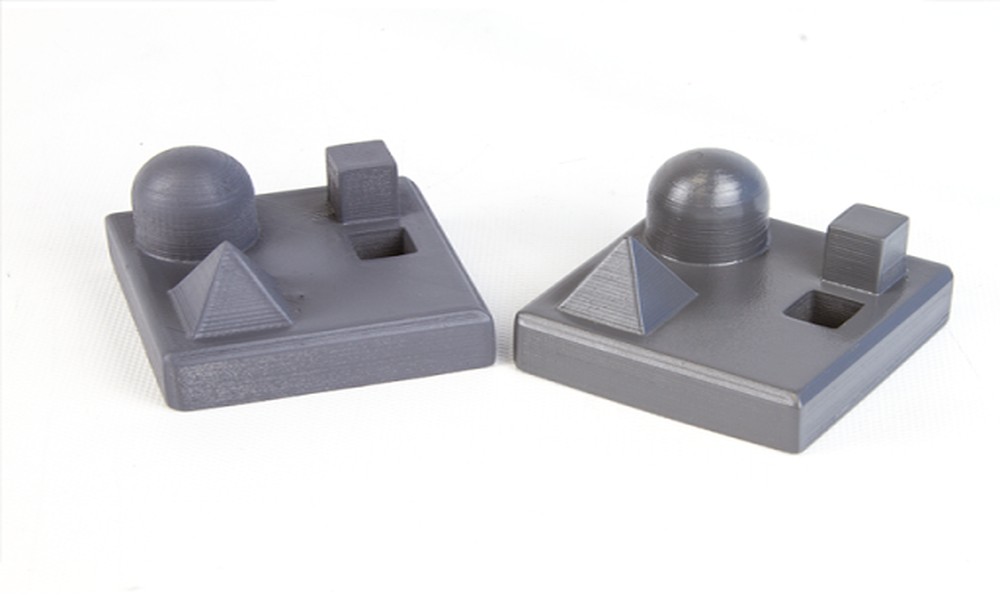
The matte surface alters the appearance of a 3D print right up front. It does not have a plastic-like finish, but instead creates a soft and smooth look that will not show layer lines. Even with standard layer heights, this makes for a more solid, neat printed part.
For makers who prefer clean prints that come out of the printer, PLA Matte is the range of PLA Filaments from Filament Hub. Finish to minimise reflection of light, making it easier to see without glare. This style is used by many users for display models, prototypes and design parts for which appearance becomes as important as function.
The aim of PLA Matte from Filament Hub is to achieve a constant surface feel and printing speed for various colours. Printed texture is uniform, there is no patchiness and unevenness.
Behavior and usability of printing.
PLA matte filament is available with the same printing characteristics as standard PLA, but has a slightly different surface finish. Flows well at typical PLA temperatures and is not highly modified to be run in the printer. This is suitable for both novice and regular users.
Filament Hub’s PLA Matte line is one of the choices that many people make because of the smooth-feeding process when extruding the material. If you maintain a constant diameter, the printer will be able to push material evenly, decreasing the likelihood of clogging and layer unevenness. This can help to maintain prints during longer jobs.
It is also important to consider bed adhesion. The typical user does not require special coatings on matte PLA to stick to the normal surface of the build. Prints typically proceed with little hassle after the first layer is completed, limiting number of print failures and wasted filament.
Printability and visual quality.
The most important benefit of matte filament is the effect that it creates at the end. Matte PLA produces a soft finish, which is great for covering up small imperfections, rather than a shiny finish that can exhibit fingerprints or surface marks. This is helpful when printing models that will be handled or displayed.
The PLA Matte series from Filament Hub is suitable for projects that require a fresh, sleek look. The colour depth is also more uniform than glossy ones. This makes it an optimal choice for design models, signage and creative projects where presentation is important.
Many users observe that the layer lines are not as prominent – even without post-processing. Even though sanding or painting may be required, the matte surface provides a more refined appearance out of the printer bed.
Selecting the right settings for improved prints
For best results with Filament Hub’s PLA Matte range it is important to set the printer’s parameters correctly. Typically a standard PLA temperature range will be suitable, but may need to be tweaked depending on printer model. Slower first layers can also help with the corners as the glue will be better adhered to the base and will help minimize warping.
There’s a role for cooling too. Good part cooling will maintain even and clean matte finish. Too high a cooling rate may cause the prints to be slightly rough, and too high a rate of change between speeds may have an impact on details. Changes that are small, start to add up over time.
It also provides proper storage and maintenance of filament. A wet surface may affect the print, giving the surface a different texture. When not in use, keep spools sealed for consistent prints.
Why makers choose this PLA matte option
The many hobby users and small business users consider a filament that not only looks good but is also easy to use. PLA Matte is the perfect solution for this because it is easy to use, but provides a premium surface finish.
It is also suitable for re-prints. Results can be repeated in a consistent way when settings are saved, and the behaviour of the material remains the same. This can be beneficial for batch printing and production runs when every piece is required to have the same design.
With time, the users are more likely to return to the PLA Matte family from Filament Hub due to the reduced finishing effort after printing. Less painting, less sanding and more components ready to use directly from the machine.