
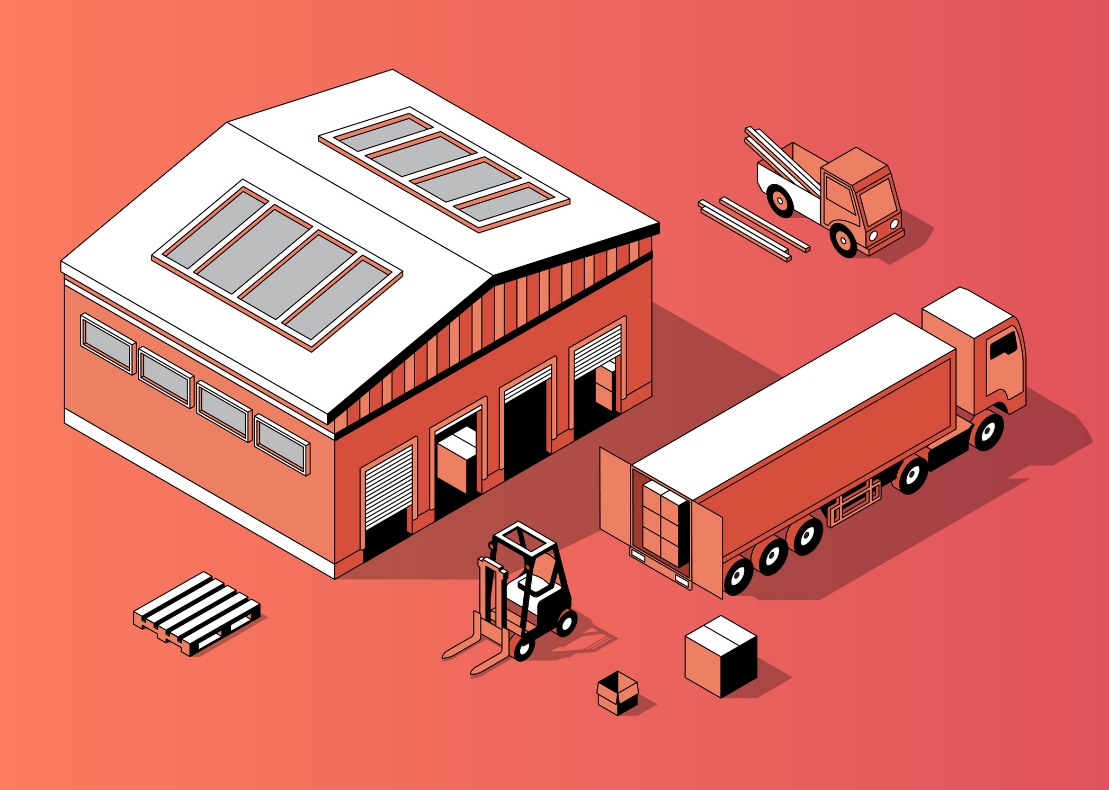
Picture a retail supply chain as a living, breathing organism. Its heart? The distribution center. Every pulse of product, every surge of customer demand, beats through these massive facilities. Yet many retailers still overlook how crucial the architecture behind these centers truly is.
Early Distribution Center Designs and Their Impact on Retail Supply Chains
Once, retail distribution centers took their cues from old-school warehouses: vast open spaces, minimal tech, and a heavy reliance on manual labor. These traditional layouts revolved around static racking and basic dock arrangements. The result? Inefficient workflows, frequent bottlenecks, and long lead times.
As retail expanded, these designs struggled to keep up. Processing growing product volumes and more frequent store replenishments exposed the limitations of early distribution centers. Delays at the center rippled all the way to store shelves, often leaving retailers scrambling to meet customer expectations.
Emergence of Smart Architecture Concepts in Distribution Centers
Enter smart architecture. The landscape began to shift as designers and engineers recognized that supply chains could only move as fast as their slowest point. Advanced material handling systems took center stage, embedding automation into the very skeleton of these buildings. Conveyors, overhead trolleys, and carousels started replacing manual sorting and transport.
This leap in design thinking was also driven by a performance Code philosophy, which put operational efficiency and adaptability above mere compliance. Centers built with this philosophy in mind prioritized the integration of emerging technologies, flexible layouts, and efficient material flow, without sacrificing code requirements or worker safety.
Case Study: Reitmans’ 800,000 sq. ft. Distribution Center
Nowhere is this smarter approach more apparent than in the Reitmans distribution center in Saint-Laurent, Quebec. Designed for one of Canada’s largest women’s clothing retailers, this 800,000 square foot facility supports roughly 600 stores across the country. The architectural blueprint behind this center, crafted by distribution center architect Stendel + Reich, stands as a benchmark for the industry.
What sets this project apart is the seamless integration of sophisticated sorting and distribution technologies. An intricate web of conveyors, overhead trolleys, and high-speed carousels allows clothing products to be sorted into store-ready bins within hours of receipt. Even the building’s spatial flows were tailored for efficiency, products enter, get scanned and sorted, then flow directly to shipping zones with minimal human intervention.
The impact? Reitmans slashed store replenishment times, improved inventory accuracy, and gained the agility to respond instantly to changing store demands.
Technological Advances Driving Modern Distribution Center Architecture
Smart centers like Reitmans’ rely on automation as their lifeblood. Conveyors hustle products from receiving to sorting zones, overhead trolleys whisk bins across multiple levels, and carousels speed up individual order picking. These systems not only cut manual labor but also shrink error rates and boost throughput.
Paired with these physical systems is real-time inventory tracking. Modern distribution centers integrate data systems that provide live updates on product locations, incoming shipments, and outbound orders. Managers can respond to disruptions with a few clicks, sidestepping the information lag that once hampered traditional facilities.
Benefits of Smart Distribution Centers for Retail Supply Chains
When supply chains hinge on speed, agility, and precision, smart distribution centers deliver a measurable edge. Enhanced responsiveness means stores can adjust their inventory in near real-time, quickly pivoting to meet local trends or sudden spikes in demand. These centers also drive down operational costs, reducing labor needs and shortening lead times across the board.
Scalability is another critical benefit. As retailers expand, whether by opening new stores or launching e-commerce operations, modern distribution centers can add new automated modules or reconfigure layouts to adapt, often with little disruption to daily operations.
Future Trends and Evolving Needs in Distribution Center Design
Looking forward, sustainability looms large. Energy-efficient lighting, climate control, and building materials are becoming standard features as retailers look to shrink their environmental footprint. But the evolution doesn’t stop at green initiatives.
The unstoppable rise of omni-channel retailing and e-commerce demands even more flexible and responsive distribution centers. Spaces must be able to handle both pallet loads for stores and individual boxes for online shoppers, often side by side. Innovations in AI and robotics are poised to take this flexibility even further, bringing predictive analytics and automated picking to the forefront of design.
Conclusion: The Critical Role of Architectural Innovation in Retail Success
Retail’s race to meet ever-changing consumer expectations is only intensifying. The evolution from basic warehouses to intelligent distribution hubs has transformed how retailers replenish stores, control costs, and drive growth. With examples like Reitmans’ facility leading the way, it’s clear that investing in smart architectural design is no longer a luxury, it’s mission-critical.
For retailers and architects alike, the message is simple: prioritize adaptability, integrate advanced technologies early, and design with scalability in mind. The future of retail belongs to those who treat their distribution center architecture as a strategic advantage, not just a line item on a blueprint.